On Cooking, Leading, and the Table Between: A Life in Food and Wine, and What It Taught Me About Gathering People with Purpose
I was eight years old the first time my grandmother handed me the kitchen.
Not figuratively. She stepped back from the stove in her house in Brittany, gave me the apron, and let me take over. The dish was chicken schnitzel. I was confident. I was also eight years old, and I used 500 grams of cooking butter.
She didn’t hover. She didn’t rescue me when the result arrived at the table in all its catastrophic richness. She let me own the mistake completely, feel its weight, and understand what it meant to be responsible for an outcome that mattered to others.
It was, looking back, one of the most formative leadership lessons of my life. Delivered over a pan on a stove in Brittany, by a woman who had never used the word “leadership” in her life.
She also told me, more than once: if men spent more time in the kitchen, there would be fewer wars in the world. I have been sitting with that sentence for the better part of four decades.
The kitchen as a school
What my grandmother understood, and what I came to understand slowly over years of cooking for myself and others, is that the kitchen was not a domestic space but a discipline where shortcuts get exposed faster than in any boardroom.
To cook well, you have to slow down. The ingredients resist you, the timing exposes every shortcut, the outcome is honest in a way that few professional deliverables are. You must pay attention to the produce, the heat, the people you are feeding and what they actually need, not just what you feel like making. Cooking asks you to subordinate your preferences to someone else’s wellbeing.
The science backs this up. Studies linking the physical rhythm of cooking, the chopping, the stirring, the smell of something reducing, with lower cortisol and reduced anxiety are well established. For many people cooking works as active meditation, not because it is relaxing but because it demands presence. I have cooked through difficult negotiations, through professional uncertainty, through the exhaustion of leading organisations in crisis. The kitchen has always given me back something the day took.
But cooking alone is only half of it. The meal is where it completes itself.
The French philosopher Michel Onfray wrote that the shared table is where human civilisation actually happens, where sitting and eating together converts strangers into allies. Anthropologists call this commensality, and they find it in every human culture across every period of recorded history. My grandmother’s kitchen was a perfect expression of it. You sat down, you ate well, and you talked. Really talked. The food created the conditions for honesty. She understood this completely, and she never needed a study to confirm it.
I have kept this my whole adult life. I cook for friends, for partners, for myself. The kitchen is where I think most clearly. The table is where I connect most honestly. I do not see these as habits separate from my professional life. They are continuous with it.
The French chef Hélène Darroze once said that cooking with your heart matters more than cooking with your skills. In her book "Personne ne me volera ce que j'ai dansé", she wrote that emotion is the starting point and authenticity is the guiding thread. I think my grandmother would have agreed with both, though she would have added that the heart and the skill are not really separate things. The skill, if you practise it long enough, becomes a form of feeling.
Learning wine before I could drink it
Wine came to me as geography before it came as taste.
In my family wine was not a luxury or a special occasion. A language, rather, a way of talking about place, season, and care. You learned which wine went with which dish not because someone taught you a rule but because you watched it happen, thousands of times, across thousands of meals. I did not drink at that age but I travelled through appellations the way other children collected stamps. Muscadet. Vouvray. Sancerre. Chinon. French wine was my first serious map of the world.
Discovering wine this way, before the vocabulary, as a child absorbing rather than studying, leaves a particular mark. The relationship becomes sensory and emotional before it becomes intellectual. When I later built menus at my restaurants in Perth, this was the instinct behind everything: wine is not just an accessory but a part of the language the experience speaks.
The harvests taught me something different again. Muscadet in the Loire, where the granite soils produce a wine of bracing minerality most of the world still underestimates. Franconia near Würzburg, where I cut grapes in cool September mornings and understood for the first time how cold-climate viticulture demands a different kind of patience. Beaujolais in 2016, the last harvest of my European chapter, with its combination of physical exhaustion and communal joy the French call the spirit of the vendange. You finish the day with soil under your fingernails, a shared meal that nobody photographed, and the satisfaction of having contributed something to a bottle that will outlast the season.
And in 1992: a harvest at Domaine de la Romanée-Conti in Burgundy. For those unfamiliar: Romanée-Conti is arguably the most mythologised vineyard on earth. Its Grand Cru Pinot Noir commands prices that make serious collectors pause. A single bottle of the 1945 vintage sold at Sotheby’s in 2018 for over half a million US dollars. The estate produces around 450 cases of its flagship wine per year, for the entire world. Working its harvest is not a common opportunity.
The 1992 vintage was not a great year. The season had been wet, mildew and rot were serious problems, and only a dry August and ruthless selection in the vineyard rescued the crop. That ruthlessness is what I remember most vividly. The willingness to leave fruit on the ground rather than compromise the wine. The standard was set not at the press or in the barrel room but in the field, in the decision about what was good enough and what was not. Excellence, I understood that season, is a practice of elimination as much as creation. You decide what stays and what goes. That decision defines everything.
I have applied that principle in every organisation I have led since.
The table as a negotiating room
My professional life in Paris ran, for many years, alongside the city’s restaurant culture in a very specific way. Collective bargaining in France, the formal negotiation of employment conditions between employer organisations and trade unions, is a social process as much as a legal one. The formal sessions happen in meeting rooms. The real conversations happen at the table.
I developed a practice of beginning sensitive negotiations with a lunch or dinner rather than a briefing document. Not as a manipulation: experienced union leaders see through that immediately. It was a genuine acknowledgement that the people across from you are human beings before they are adversaries. A well-chosen bottle of wine, shared without agenda, has a way of reminding everyone of that. I have watched positions soften over a first course that would have hardened further in a conference room. Some of the relationships I built across those restaurant tables survived years of subsequent conflict because they were grounded in something more than contractual obligation.
The principle, I should admit, has not been confined to professional life. I negotiated my marriage over a bottle of Australian Pinot Noir. The daily negotiations that followed, over where to live, when to travel, whose turn it was to cook, which wine to open on a Wednesday evening for no particular reason, have all been conducted at the table, with food involved, at a pace that a meeting room would never have allowed. I am not sure my record in those negotiations is any better than it was with the trade unions. But the outcomes have generally been more satisfying, even after I drowned my divorce's tears in a very large glass of Vega Sicilia Unico.
Which is perhaps the point. Whether the stakes are a collective agreement, a marriage, or simply the question of where to live next, the table has always been where the real conversation happens. Trust does not form in meeting rooms. You cannot rush it with a slide deck. You cultivate it with good food, good wine, and the willingness to be present without an agenda for two hours.
French gastronomy as national heritage
In 2010 France succeeded in having its gastronomic meal inscribed on the UNESCO list of Intangible Cultural Heritage of Humanity. Not the cuisine, not a specific dish, but the meal as a practice: choosing dishes, pairing food and wine, composing a table, conducting a conversation across it. France was saying, to the world, that this is worth protecting.
I have seen it protected and promoted seriously, at close range, through my years with the French-Australian Chamber of Commerce and Industry and across diplomatic events organised through the French Embassy network. The Beaujolais Nouveau launch. The Bastille Day dinners. The formal receptions where the menu is never an afterthought, where the wine selection represents specific regions and producers, where the experience of sitting at a French table is itself the message. Deliberate acts of cultural argument, every one of them.
The most powerful argument for a culture is an experience of it, not a description. You can publish brochures. You can run seminars. Or you can invite someone to a table where everything, from the amuse-bouche to the digestif, has been chosen with knowledge and care, and let them draw their own conclusions. I have watched people who arrived sceptical leave converted, not by an argument but by a meal.
FACCI connects French and Australian businesses through trade data and market briefings, yes, but also through the shared rituals that French professional culture has always relied on. When a French producer meets an Australian importer across a table rather than across a spreadsheet, the relationship that forms is different. More durable. More honest.
I participated in these events not as a passive guest but as someone responsible for the quality of the experience. Which wine represented the appellation well at this price point. Which producer’s story would resonate with this audience. How to pace an evening so the conversation arrived at the right depth by the right moment. These details separate a memorable event from a forgettable one.
French gastronomy is, in the end, a form of soft power. The capacity to make another country feel, through direct sensory experience, that France has something worth knowing about. Australia increasingly understands this on its own terms, through its own wine regions, its own restaurant culture, its own producers who take provenance seriously. The conversation between these two food and wine cultures is one of the more interesting ones I have had the privilege of sitting inside.
Travelling through the world’s cellars
Travel has been inseparable from wine and food for me since I was old enough to choose my own itinerary.
It helped that I married someone whose appetite for the world was even greater than my own. She did not wait for opportunity to present itself. At one point she negotiated leave directly with my president, bypassing every conventional channel, because there was a journey she had decided we were going to take. I learned quickly that resistance was both futile and foolish. What followed, across years and continents, was a shared education in how the world tastes.
Riding through Europe on a motorbike in the late 2000s, I carried bottles in the panniers. Not as souvenirs, more as proof. A Riesling Spätlese from a small producer outside Rüdesheim that I had watched being bottled three days earlier. A Ribera del Duero from a bodega in Castile whose owner opened something from a private cellar that bore no label. A Roussette from Savoie that I balanced across the Alps wrapped in a shirt because I had no better solution and refused to leave it behind. Each bottle was a compressed version of a place and a conversation, something to open later with someone worth opening it with.
The pattern extended everywhere wine was made seriously. Chile and Argentina, where I found that the New World could produce wines of genuine complexity, not just volume. South Africa’s Stellenbosch and Franschhoek, where European traditions had taken root in a radically different landscape and become something of their own. California’s Napa Valley, which I approached with the reflexive scepticism of a Frenchman and left with more respect than I had arrived with. The lesson was the same everywhere: great wine comes from people who have decided their place is worth expressing with complete seriousness. The terroir matters. The intention matters more.
Accommodation became part of this equation in ways I had not anticipated. A boutique hotel in Burgundy where the owner poured the previous night’s open bottle at breakfast without being asked. A family B&B in the Douro Valley where the food had been grown on the property and the wine made fifty metres away. A property in the Clare Valley where every room faced the vineyard because no other orientation made sense. These places taught me that great hospitality in a wine region is never accidental. Someone decided, at every point in the design, that the place itself was the product. You can feel that decision the moment you arrive. You can feel its absence too.
The wrong kind of accommodation makes that absence loud. A generic hotel dropped into a wine region, wine list sourced from a national distributor, restaurant that could be anywhere, tells the guest without saying a word that the place does not believe in itself.
This question absorbed me enough that I wrote my MBA dissertation on it in 2016: the relationship between wine tourism experience and accommodation quality. The answer, consistently, was intention. The places that got it right had decided the experience was the product. The places that got it wrong treated beds as logistics.
Location, food, wine, accommodation: not four things but one equation, one intricate dance that seals the experience.
Australia, and a long love affair with Margaret River
I visited Australia for the first time in 2004, and wine was part of the itinerary from the start. The Hunter Valley, the Barossa, the Clare and Eden Valleys, McLaren Vale: I built a working knowledge of Australian wine over a decade of visits before moving here permanently, the way you build a working knowledge of a person through repeated conversations before you really understand them.
Margaret River was different from the first time I encountered it properly. My entry point was the estates that had already established the region’s reputation internationally: Vasse Felix, whose Cabernet had a structural elegance I had not expected; Voyager Estate, where the formality of the setting matched the seriousness of the wine; Pierro, whose Chardonnay made several assumptions I had brought from Burgundy feel somewhat provincial. These wines did not ask for context or comparison. They stood on their own terms.
From there I found the producers working at a different scale. Cullen, whose commitment to biodynamics produces wines of real precision and a sense of place that few Australian estates match. Glenarty Road, where the approach is quieter and more instinctive, and the wines reflect that quality of listening to the land rather than imposing on it. The further I went into the region, the more convinced I became that Margaret River contained multitudes: established estates operating at international benchmark level, and smaller producers doing original work the wider world has barely begun to notice.
The Cabernet Sauvignon, across all of it, stopped me. Its structure and restraint, its capacity for ageing without hardness, its relationship to the specific soils and maritime climate: this was not a wine trying to be something else. It was entirely itself.
I have been a vocal ambassador for Margaret River wine ever since. Not because it resembles anything I knew before, but because it does not. An original voice in world wine, not yet heard at the volume it deserves. The karri forests, the Indian Ocean light, the red gravel soils: the physical landscape has the quality that the best wine regions share, the sense that the vines and the climate and the geography arrived at this arrangement through something more than accident. When a region feels like that, the wine tends to feel like that too.
Building menus around wine, not the other way around
When I opened Hexagone on Hay Street in Perth, the founding decision was deliberate and, to some of our suppliers, slightly perplexing: we would build the food menu around the wine list.
The conventional approach goes the other way, the wine list assembled to complement an already-fixed menu. We started with the wines we believed in, the producers we wanted to champion, the appellations we wanted to introduce to a Perth audience, and designed the food to complete those bottles. The wine was the architecture. The food was the interior design.
At The Crêperie by Hexagone, we took this further, designing specific galettes and crêpes around individual wines and beverages. A particular Muscadet demanded a specific buckwheat galette. A dry cider from Normandy suggested its own accompaniment. A Margaret River Chardonnay of a certain weight and texture called for something that would neither overwhelm it nor disappear beside it. A deeply French instinct, rooted in the understanding of food and wine as a single language rather than two parallel conversations. Our guests understood it immediately, because it made the experience feel coherent rather than assembled.
Hospitality, done well, is always about coherence. The alignment of every element, the space, the light, the menu, the wine, the service, the pace of the evening, toward a single feeling that the guest carries home. This takes genuine knowledge and genuine care. It requires the willingness to make decisions that a less committed operator would not bother making.
In the end, what I was trying to do at Hexagone was what my grandmother did in that kitchen in Brittany every evening. She had decided the meal mattered. She had decided the people around her table deserved her full attention and her best effort. Everything else followed from that decision.
Even if, on one occasion, the eight-year-old she trusted with her stove used rather too much butter.
What I have come to understand
Any organisation in the hospitality space, whether it represents accommodation, food, wine, or the full experience of a place, faces this reckoning eventually. The ones that treat their gatherings as logistics, that book a room and tick a box, that miss the opportunity to make the people they serve feel that their work is being taken seriously, are failing at something more fundamental than event management. The best industry organisations understand hospitality as mission. Gathering people well, creating the conditions for genuine connection and honest conversation, amplifying the pride that makers and growers and operators feel about what they have built: that is the work.
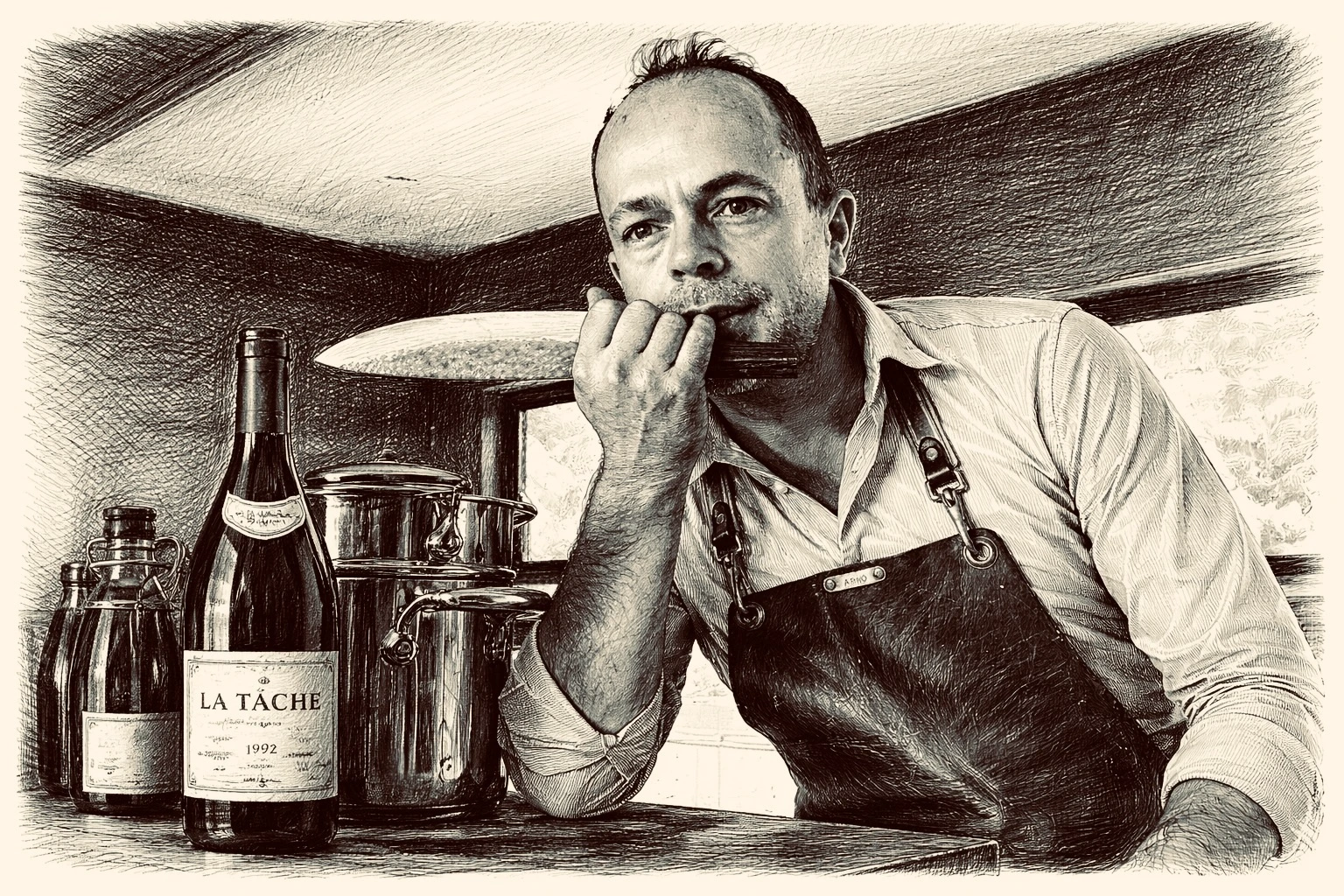
My grandmother said that more time in the kitchen would mean fewer wars. I used to think she was talking about men and domesticity. I now think she was talking about something harder to name: the specific kind of trust that forms when people stop performing at each other and just eat together.
My next chapter is about serving a community where craft is not a marketing word but a daily practice, where the people behind the product, in the field, in the workshop, at the cellar door, at the counter, deserve leadership that understands what they have built and takes it as seriously as they do.